

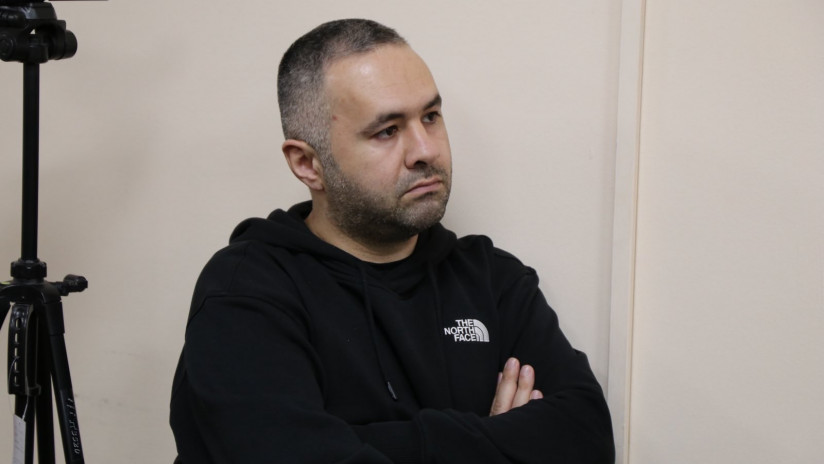
Imprisoned journalists from “Abzas Media,” including director Ulvi Hasanli, have ended a hunger strike initiated to protest their convictions and detention conditions. The decision to cease the protest was primarily driven by concerns for the health of fellow journalists who had joined the strike in solidarity.
The hunger strike began on June 26 when Ulvi Hasanli, director of the independent media outlet “Abzas Media,” initiated the protest from a punishment cell in Umbakı prison. Hasanli’s demands included a meeting with his wife, Rubaba Guliyeva, and his two-year-old daughter, as well as his transfer back to the Baku Pre-trial Detention Center. He was reportedly moved to Umbakı prison following his conviction, a transfer his family and legal team deemed unlawful as his verdict had not yet come into legal force.
Background of the “Abzas Media” Case
The “Abzas Media” case has drawn significant international attention. On June 20, the Baku Court of Grave Crimes issued severe sentences against seven journalists associated with the outlet. Ulvi Hasanli, founder of “Abzas Media,” editor-in-chief Sevinj Vagifgizi (Abbasova), Radio Azadlig journalist Farid Mehralizade, and Turan Information Agency editor Hafiz Babali were each sentenced to 9 years in prison. Journalists Nargiz Absalamova and Elnara Gasimova received 8-year sentences, while Mahammad Kekalov, “Abzas Media” coordinator, was sentenced to 7 years and 6 months.
The journalists face charges including currency smuggling, illegal entrepreneurship, money laundering, and tax evasion. They vehemently deny these accusations, asserting that they are being persecuted for their professional journalistic activities and their investigations into corruption. Arrests in the “Abzas Media” case commenced on November 20, 2023.
The Hunger Strike and Solidarity
Hasanli’s hunger strike was a direct response to his transfer and alleged mistreatment. His wife, Rubaba Guliyeva, reported that during a phone call on June 30, Hasanli’s voice sounded “very bad” and he claimed to have been subjected to “pressure, threats, and torture” for five days. She added that he had been denied personal belongings and the opportunity to change clothes, and was told he would not be allowed family visits due to the lack of an “official marriage,” despite having a young child. On July 1, his lawyer, Zibeyda Sadigova, confirmed Hasanli’s hunger strike, noting his weight had dropped from 77 kg to 71 kg. His family also reported that two detention center employees had subjected him to violence, causing him to hit a bed and injure his leg, with injury marks reportedly still visible. Appeals have been made to the Penitentiary Service and the Ombudsman’s Office regarding these claims.
In a powerful show of solidarity, female journalists from “Abzas Media” – editor-in-chief Sevinj Vagifgizi, and journalists Elnara Gasimova and Nargiz Absalamova – began their own hunger strike on July 2 (reported on July 3). They were reportedly moved to solitary confinement and had their belongings forcibly removed as soon as they started their protest. Additionally, imprisoned journalists from “Meydan TV” – Aynur Elgunash (Gambarova), Aytaj Tapdig (Ahmadova), Khayala Aghayeva, Aysel Umudova, and Fatima Movlamli (arrested in connection with the “Meydan TV case”) – also joined the hunger strike on July 4 in support of “Abzas Media” staff.
End of Protest and Unanswered Questions
On July 4, Ulvi Hasanli informed his family via a phone call that he was ending his hunger strike. He cited his concern for the deteriorating health of his fellow imprisoned colleagues who had joined the protest in solidarity. Following his announcement, Sevinj Vagifgizi, Nargiz Absalamova, and Elnara Gasimova also ceased their hunger strikes.
As of the latest reports, the Penitentiary Service and other official bodies have not provided comments on the allegations of mistreatment or the hunger strikes. Officials in Azerbaijan consistently state that no one is arrested for their professional activities or on political grounds, asserting that those detained have committed criminal offenses. However, international human rights organizations have consistently called for the release of those they consider unjustly detained, highlighting that over 370 political prisoners are currently held in Azerbaijani prisons, according to local human rights groups.
The end of the hunger strike brings a temporary halt to this form of protest, but the underlying issues of the journalists’ convictions, their detention conditions, and the broader crackdown on independent media in Azerbaijan remain a significant concern.