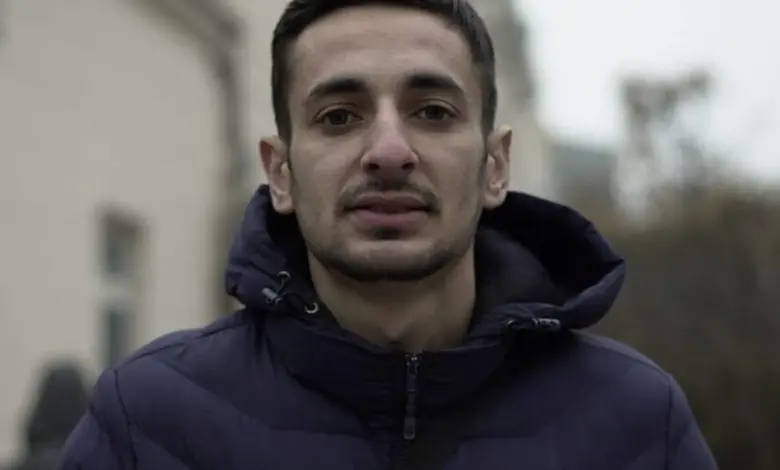
An imprisoned Azerbaijani journalist has marked two years in detention by releasing a rare account of life inside the country’s prison system.
Farid Mehralizade, an economist and reporter for Radio Free Europe/Radio Liberty (RFE/RL), was arrested on 30 May 2024 as part of a sweeping government crackdown on independent media.
In a letter smuggled from his cell to mark the anniversary, Mehralizade described the emotional toll of his imprisonment, particularly missing the birth and early years of his daughter.
“My child was born a few months after I was arrested,” Mehralizade wrote. “We have only ever seen each other during prison visits. Because of this, we still do not have a real photo together.”
He recounted how friends recently used artificial intelligence to generate a composite image of him holding his daughter.
“The photo looked so real it was shocking,” he said. “But no technological progress can replace human feelings or being there.”
In his reflections, Mehralizade offered a sharp analysis of how Azerbaijan’s political climate is reflected behind bars.
He revealed that within the prison system, the word “journalist” has effectively become slang for “political prisoner”, used to refer to reporters, opposition politicians, and civil rights activists alike.
“This naming is not accidental,” Mehralizade wrote. “It shows how risky and dangerous independent journalism has become in Azerbaijan.”
With internet access banned in Azerbaijani prisons and state television offering little actual news, he said independent journalism is virtually invisible to the inmate population, except through those who have been jailed for practicing it.
As an economist, Mehralizade also analysed the socioeconomic background of his fellow inmates.
He noted that many of those jailed under Azerbaijan’s strict drug laws—referred to inside as the “national article”—were not drug users, but impoverished individuals driven to work as couriers by systemic unemployment.
He called for robust employment programmes for former prisoners, warning that without economic alternatives, many are forced back into crime.
“From prison, the first visible problem in the Azerbaijani economy is employment,” Mehralizade wrote, adding that he had also met numerous business owners jailed over minor tax debts.
“Jailing an entrepreneur doesn’t just mean one person losing their freedom. It means a business shutting down, jobs being lost, and dozens of families losing their income.”
The anniversary of Mehralizade’s arrest coincides with a major international development for Abzas Media, the investigative outlet at the centre of the criminal case in which he was arrested.
The Global Investigative Journalism Network (GIJN) announced it has unanimously admitted Abzas Media as one of 10 new members.
The US-based international organisation praised the outlet’s work in exposing high-level corruption, illegal financial flows, and systematic abuses of power in Azerbaijan.
Due to intense government pressure and the arrest of its key leadership, Abzas Media has been forced to operate in exile.
Emilia Diaz-Struck, the executive director of the GIJN, said the courage of the new member organisations in holding institutions to account served as “an inspiration to the entire network”.
The addition of Abzas Media and nine other outlets brings the GIJN’s global membership to 266 organisations across more than 90 countries.